
Headstone Unveiling Ceremony: What It Is and How to Plan One
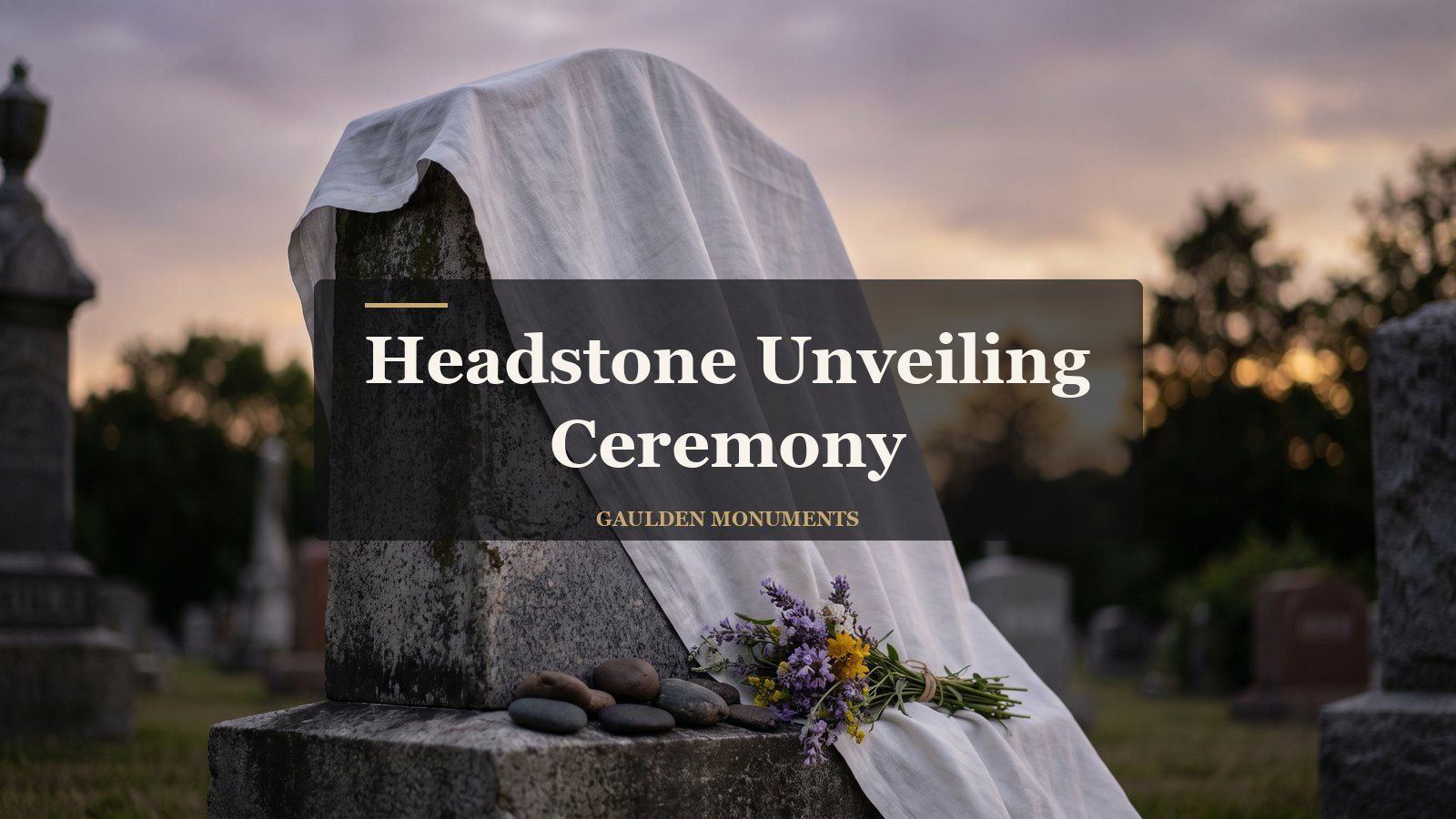
A headstone unveiling ceremony is a short gathering at the grave, usually within the first year after a death, at which the new monument is revealed and the person is remembered again. It began as a Jewish custom and is now held by families of many backgrounds who want a second, quieter moment after the funeral. This guide explains where it comes from, when to hold it, and a simple order of service you can adapt.
Where the custom comes from
In Jewish tradition the monument is often set and dedicated within the first year of mourning, commonly near the first anniversary of the death (the yahrzeit), though there is no fixed rule and timing varies by community. The stone is covered with a cloth, prayers are said, the cloth is removed, and mourners leave a small stone on the grave as a sign that they visited. Many Christian and non-religious families have adopted the shape of the ceremony as a "dedication" or "blessing of the headstone," with their own readings.
When to hold it
- After the monument is installed and inspected. Ask the monument company to confirm the stone is set and the cemetery has signed off before you invite anyone. If you are still waiting on the stone, our guide to how long after death a headstone is placed explains what sets the timeline.
- Traditionally within the first year; practically, whenever the family can gather. Sunday afternoons are common because cemeteries are quiet.
- Avoid the hottest part of a Carolina summer day. Older relatives will be standing on uneven ground.
A simple order of service
An unveiling usually runs fifteen to thirty minutes. A rabbi or minister may lead, but many families lead it themselves. A common order:
- Gather at the grave with the stone still covered by a cloth.
- Opening reading. Psalm 23 is the near-universal choice; Psalm 121 and Psalm 16 are also common. For the New Testament, John 14:1-3 is the usual pairing; see New Testament readings for funerals.
- Words of remembrance. One or two people speak for a few minutes each about the person, not a eulogy but a memory.
- The unveiling. A family member removes the cloth and the inscription is read aloud.
- Memorial prayer. In Jewish practice, El Malei Rachamim and the Mourner's Kaddish (traditionally said with a minyan of ten). In a Christian dedication, a prayer of thanksgiving and a blessing of the stone; a minister may use words such as "We dedicate this stone to the memory of..."
- Closing. Mourners place a small stone on the monument or base (Jewish custom) or lay flowers. Some families sing a hymn.
What to bring
- A plain cloth large enough to cover the face of the stone (a white pillowcase or a length of linen works).
- Printed readings in large type; do not rely on phones in bright sun.
- A few folding chairs for anyone who cannot stand long.
- Small stones or flowers, depending on custom.
- Water, and a plan for shade or rain.
Etiquette
- Dress as you would for a church service; dark or muted colors.
- No gifts. The family may host a light meal afterward, but it is not expected.
- In Jewish custom, stones are left rather than flowers; if you are unsure, ask the family beforehand.
- Photos are fine; many families take one of the inscription for relatives who could not attend.
Before the ceremony: check the stone
Visit the grave a few days ahead. Read every line of the inscription against the proof; confirm the stone is level and the base is clean. If it needs a wipe-down before guests arrive, our step-by-step on how to clean a granite headstone covers what is safe to use. Any error in the lettering should go to the monument company before the ceremony, not after.
Frequently asked questions
Do you need a rabbi or minister?
No. Clergy are welcome and many families prefer it, but the ceremony can be led by a family member reading from a printed order of service.
Is an unveiling only a Jewish custom?
It began as one, and the term "unveiling" is still mostly used in Jewish communities. Christian families increasingly hold a headstone dedication or blessing that follows the same outline with different prayers.
What if the stone was placed years ago?
A dedication can be held at any time. Families sometimes hold one when an old grave is finally marked, or when a stone is replaced or re-lettered.
Can the inscription include a verse?
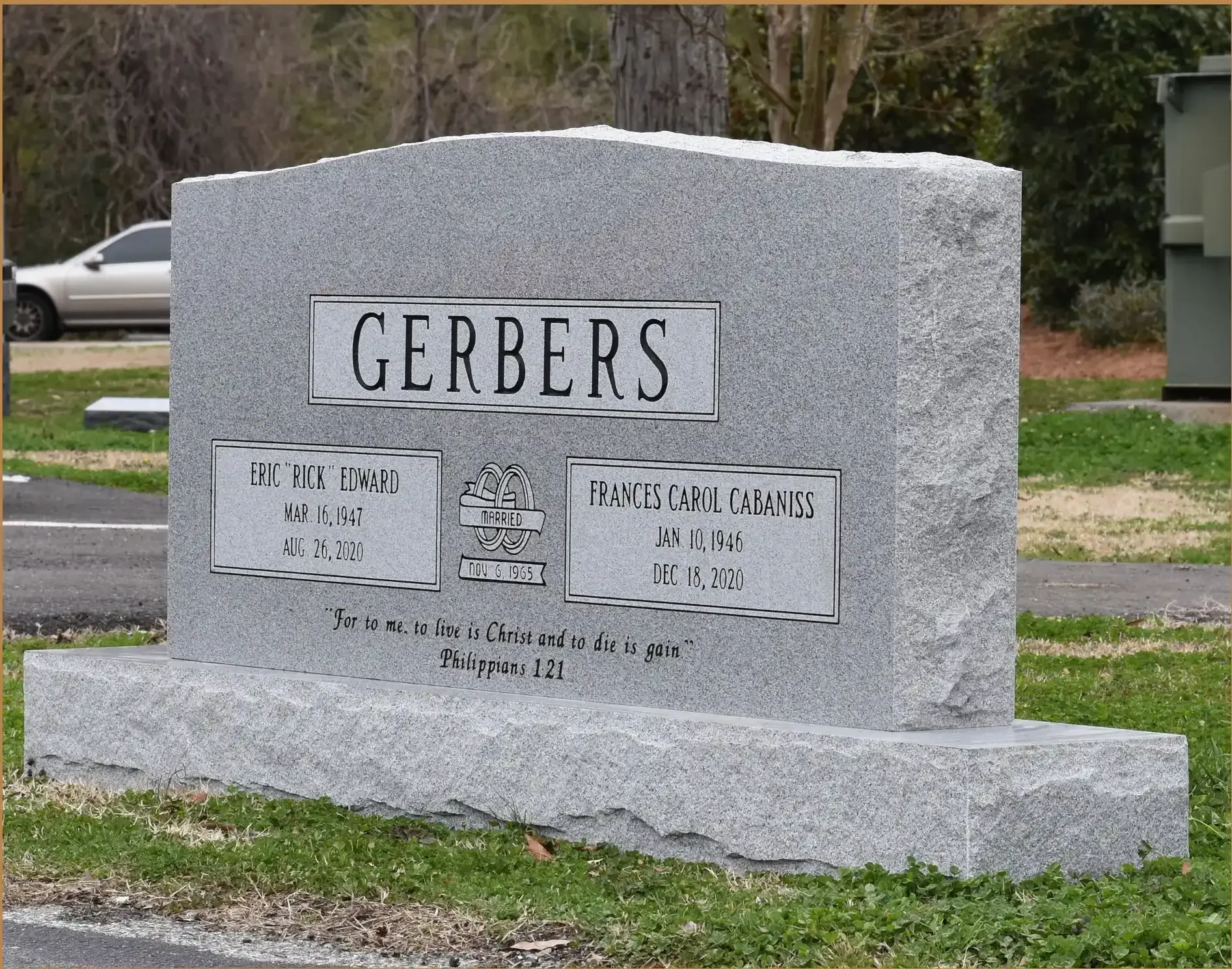
Almost always. Short lines that fit a marker are collected in Bible verses for headstones and Psalms for headstones.
Gaulden Monuments sets monuments in cemeteries across the Carolinas and ships nationwide. If you are planning an unveiling and want to confirm your stone's installation date, or you are starting from the beginning, contact us or visit one of our showrooms.
© 2026 Gaulden Monuments, Inc. All Rights Reserved.